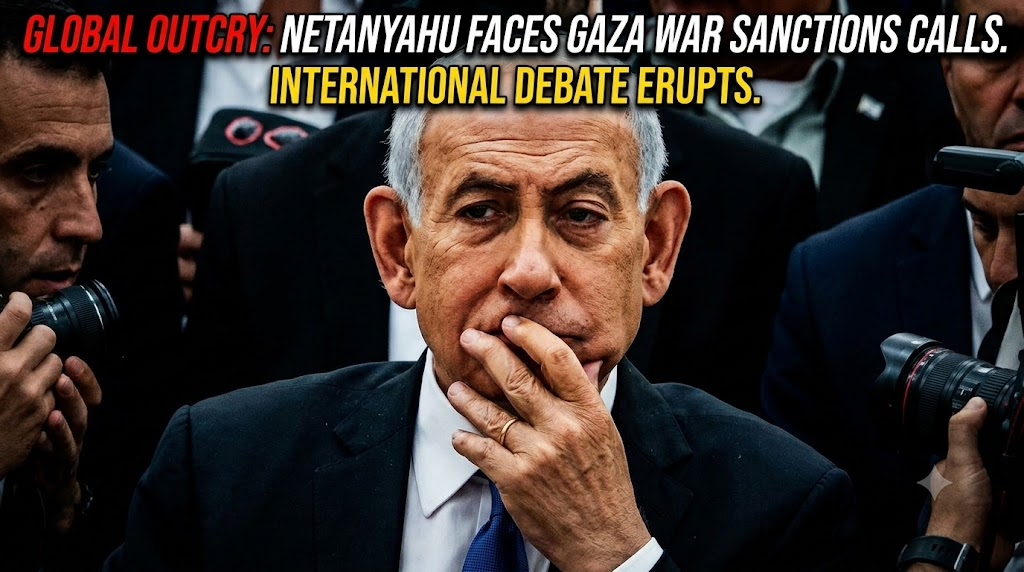
The latest image circulating across social media shows Israeli Prime Minister Benjamin Netanyahu with a serious expression alongside the headline claiming that Members of Parliament (MPs) are calling for him to be sanctioned over the alleged torture and mistreatment of Palestinian civilians. Within hours, the image spread rapidly across Facebook, X, Instagram, and Telegram, reigniting one of the world’s most heated political debates.
While the headline has generated intense reactions, it also raises important questions. What exactly are lawmakers demanding? Why has international pressure on Israel intensified in recent months? And could these growing political calls actually change the course of the conflict?
The discussion comes at a time when the humanitarian situation in Gaza continues to dominate international headlines. Months of conflict have resulted in widespread destruction, thousands of casualties, and an ongoing humanitarian crisis. International aid organizations have repeatedly warned about shortages of food, medicine, clean water, and medical supplies, while millions of civilians continue to face extremely difficult living conditions.
As these conditions have worsened, criticism of Israel’s military campaign has grown louder across many parts of the world. Human rights organizations, legal experts, and some governments have accused Israel of using excessive force and have called for independent investigations into alleged violations of international humanitarian law. Israeli officials, however, strongly reject many of these accusations, arguing that their military operations are directed against Hamas and are carried out in response to security threats following the October 7 attacks.
It is within this broader context that several lawmakers have reportedly urged stronger action against Israeli leadership.
Supporters of sanctions argue that political leaders should be held accountable whenever credible allegations of serious human rights violations emerge. They believe sanctions are an important diplomatic tool designed to increase international pressure without resorting to military action. In their view, accountability should apply equally to every nation regardless of its political alliances.
Others disagree, arguing that imposing sanctions on a sitting leader during an active conflict could complicate diplomatic negotiations and reduce opportunities for peace talks. They believe dialogue, mediation, and international diplomacy remain the most effective paths toward a lasting solution.
These competing views reflect the deep divisions that now exist not only between governments but also among ordinary citizens around the world.
Social media has played a major role in shaping public opinion throughout the conflict. Every day, photographs, videos, eyewitness accounts, and political statements are shared millions of times, often before their context can be fully verified. Emotional images frequently receive enormous attention, influencing public perception long before official investigations are completed.
The viral image involving Netanyahu is another example of how digital platforms can transform a political story into a global conversation almost instantly.
Meanwhile, legal experts continue to debate what international law requires in situations involving prolonged armed conflict. International humanitarian law places obligations on all parties to protect civilians, avoid unnecessary suffering, and allow humanitarian assistance wherever possible. Determining whether these obligations have been met often requires lengthy investigations conducted by independent institutions rather than conclusions drawn solely from social media posts or political statements.
Governments have also responded differently to the conflict. Some continue to express strong support for Israel’s right to defend itself against armed groups, while simultaneously urging greater protection for civilians. Others have adopted increasingly critical positions, calling for ceasefires, expanded humanitarian access, and greater accountability for alleged violations of international law.
These differing approaches have created visible political divisions within parliaments across Europe, North America, and other regions.
For many Palestinians, the international debate represents hope that the humanitarian suffering in Gaza will receive greater global attention. Many families continue to face displacement, damaged infrastructure, limited healthcare, and uncertain futures. Humanitarian organizations repeatedly stress that civilians should never bear the greatest burden of armed conflict.
For many Israelis, however, security remains the primary concern. The trauma caused by attacks inside Israel continues to influence public opinion, with many citizens believing that preventing future attacks requires decisive military action against Hamas. This perspective remains central to Israel’s national security policy.
The result is a conflict where both sides continue to describe their experiences through very different realities.
Political analysts believe international pressure on Israeli leadership is likely to remain a major topic as long as the conflict continues. Whether these calls eventually lead to sanctions, legal proceedings, diplomatic consequences, or renewed negotiations remains uncertain. Such decisions depend on complex political calculations involving multiple governments and international institutions.
One lesson has become increasingly clear throughout the conflict: public opinion now plays a greater role in international politics than ever before. Images shared online can influence debates in parliament, shape diplomatic discussions, and mobilize millions of people across different countries within a matter of hours.
As discussions continue over accountability, international law, and humanitarian concerns, the world remains focused on whether diplomacy can reduce the violence and create conditions for lasting peace. Regardless of political perspective, many observers agree on one point: civilians deserve protection, humanitarian assistance must reach those in need, and efforts to end the suffering should remain an urgent global priority.
The viral image of Benjamin Netanyahu has therefore become more than just another social media post. It represents the growing international debate over justice, accountability, humanitarian responsibility, and the difficult challenge of balancing national security with the protection of innocent civilian lives.