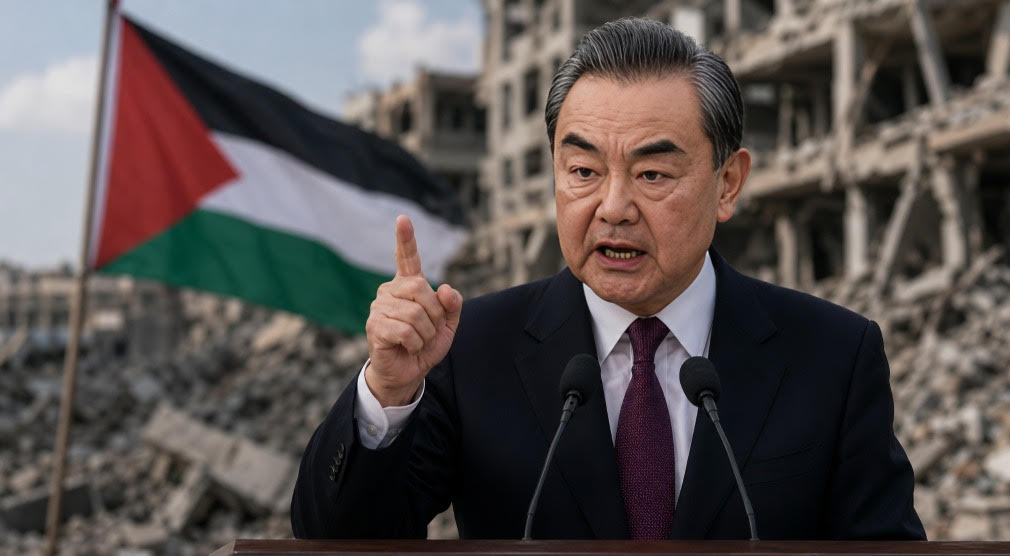
When a war becomes more than a military conflict, the world begins to argue not only about power, but about morality. The latest viral statement linked to China’s position on Gaza has once again pushed that debate into the spotlight. The message is simple but powerful: viewing the entire Gaza war only through the lens of “fighting terrorism” ignores the deeper humanitarian, political, and moral crisis unfolding on the ground.
China has repeatedly called for an immediate ceasefire in Gaza and has argued that the humanitarian disaster must be brought to an end. Chinese Foreign Minister Wang Yi has also said that violence cannot solve the conflict and that the Palestinian question remains central to peace in the Middle East. Beijing’s position has been clear in recent official statements: Gaza belongs to the Palestinian people, and any long-term solution must address Palestinian rights, regional security, and the protection of civilians.
The debate matters because the language used around Gaza shapes how millions of people understand the conflict. For Israel and its supporters, the war is often framed around security and the fight against Hamas. For Palestinians and many voices across the Global South, the focus is on civilian suffering, displacement, destruction, and international accountability. That is why statements challenging the “war on terrorism” framing gain attention so quickly — they speak to a growing frustration that human suffering is being pushed behind political narratives.
Whether people agree with China’s position or not, the wider question remains difficult to ignore: can any war be judged only by the reason given for starting it, or must it also be judged by the damage it causes? As Gaza continues to dominate global headlines, the pressure on world leaders is increasing. The conversation is no longer just about military strategy; it is about civilians, justice, international law, and whether the world is willing to see the full human cost of this conflict.