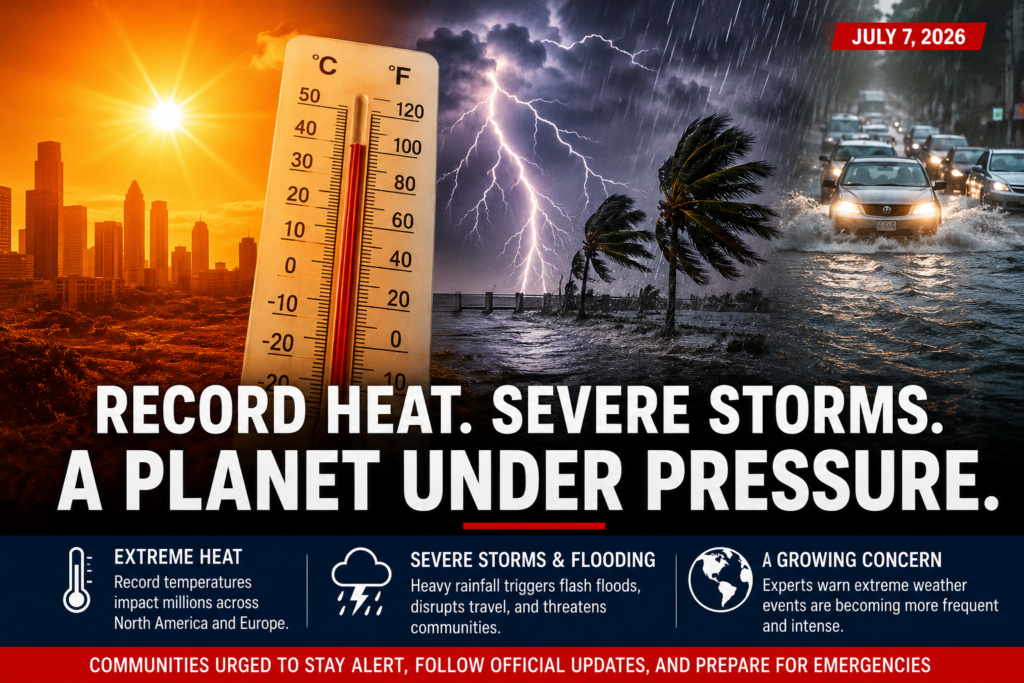
A wave of record-breaking heat, powerful storms, and climate-related emergencies is affecting millions of people across several continents, prompting governments to issue urgent warnings while emergency services struggle to respond to rapidly changing conditions. Meteorologists say the latest weather patterns highlight the growing frequency of extreme climate events, with several countries experiencing temperatures and weather conditions well beyond seasonal averages.
In North America, large portions of the United States continue to experience dangerous heat conditions. Health officials have urged residents to limit outdoor activities during peak afternoon hours, remain hydrated, and check on elderly family members and vulnerable neighbors. Several cities have opened emergency cooling centers as temperatures continue climbing, while electricity providers remain under pressure due to increased demand from air-conditioning systems.
Meteorologists also report that the intense heat has contributed to severe thunderstorms and flash flooding in some regions. Heavy rainfall following prolonged dry conditions has overwhelmed drainage systems, causing road closures, transportation delays, and localized evacuations. Emergency crews have responded to numerous rescue operations as rapidly rising water trapped motorists and residents in flood-prone neighborhoods.
Scientists explain that warmer atmospheric conditions allow the air to retain more moisture, increasing the likelihood of intense rainfall events. At the same time, prolonged heat dries vegetation and soil, making regions more vulnerable to wildfires before sudden storms arrive. This combination has become increasingly common over the past decade, presenting new challenges for disaster management agencies worldwide.
Across Europe, several countries are also monitoring elevated temperatures that have placed additional stress on agriculture and water supplies. Farmers are expressing concern over crop yields as extended dry periods reduce soil moisture during critical growing seasons. Local authorities are encouraging water conservation measures while reviewing emergency plans for possible wildfire outbreaks if dry conditions persist.
Environmental experts say these developments reinforce the importance of improving infrastructure resilience. Roads, railways, electrical grids, and healthcare systems face increasing pressure as extreme weather becomes more frequent. Urban planners are also emphasizing the need for expanded green spaces, improved drainage systems, and heat-resistant building designs to reduce the impact of future climate events.
The economic consequences are becoming increasingly significant. Businesses affected by flooding have temporarily suspended operations, while transportation disruptions continue to delay supply chains in several regions. Insurance analysts note that repeated weather-related disasters are contributing to rising claims and increasing financial risks for both governments and private companies.
Public health officials remain particularly concerned about vulnerable populations, including older adults, young children, outdoor workers, and individuals with chronic medical conditions. Medical experts warn that heat exhaustion and heatstroke can develop rapidly when temperatures remain exceptionally high for extended periods, especially during consecutive days without nighttime cooling.
International climate researchers stress that no single weather event can be attributed solely to climate change. However, long-term scientific observations indicate that rising global temperatures are increasing the likelihood and intensity of heatwaves, heavy rainfall events, and other forms of extreme weather. Many research organizations continue to monitor these trends while governments evaluate long-term adaptation strategies.
Emergency management agencies are advising residents to follow official weather updates, prepare emergency kits, avoid unnecessary travel during severe weather warnings, and remain alert for changing local conditions. Authorities emphasize that timely preparation can significantly reduce the risks associated with flash floods, extreme heat, and severe storms.
As weather systems continue evolving over the coming days, millions of people remain under various heat advisories and weather alerts. Officials say close coordination between national meteorological agencies, local governments, and emergency responders will remain essential as communities navigate another period of unusually severe weather.
While recovery efforts continue in affected areas, experts believe the latest events serve as another reminder that adapting to increasingly volatile weather patterns has become a global priority. Investments in resilient infrastructure, improved forecasting technology, and public awareness campaigns are expected to play a central role in reducing future risks as climate-related challenges continue to grow.